
Navigating the world of parenting can feel like trying to solve a Rubik’s Cube blindfolded. Enter Diana Baumrind, the parenting guru who cracked the code with her groundbreaking styles. Whether you’re a strict enforcer or a laid-back buddy, Baumrind’s research offers insights that can transform your approach to raising kids.
Overview of Diana Baumrind Parenting Styles
Diana Baumrind identified four primary styles of parenting: authoritative, authoritarian, permissive, and neglectful. Each style reflects different approaches and attitudes towards child-rearing.
Authoritative parenting focuses on a balanced approach. Parents set clear expectations and rules while maintaining flexibility and responsiveness. This style promotes independence and encourages open communication. Research suggests that children raised by authoritative parents often display higher self-esteem and better social skills.
Authoritarian parenting emphasizes strict discipline and adherence to rules. Parents who adopt this style value obedience and control over warmth and nurturing. While this approach may produce obedient children, studies link it to lower self-esteem and increased anxiety in kids.
Permissive parenting is characterized by a high level of warmth but a low level of discipline. Parents are lenient and allow considerable freedom, often avoiding setting boundaries. Although children may enjoy a relaxed environment, lack of structure can lead to issues with self-regulation and responsibility.
Lastly, neglectful parenting involves a lack of responsiveness and engagement. Parents are often emotionally uninvolved and indifferent to their children’s needs. This style can have detrimental effects on child development, leading to issues such as attachment problems and behavioral difficulties.
Understanding these parenting styles aids caregivers in adapting their approaches. By recognizing their tendencies, parents can shift strategies to promote healthier child development. Baumrind’s research serves as a foundational guide for navigating parenting choices effectively.
Authoritarian Parenting Style
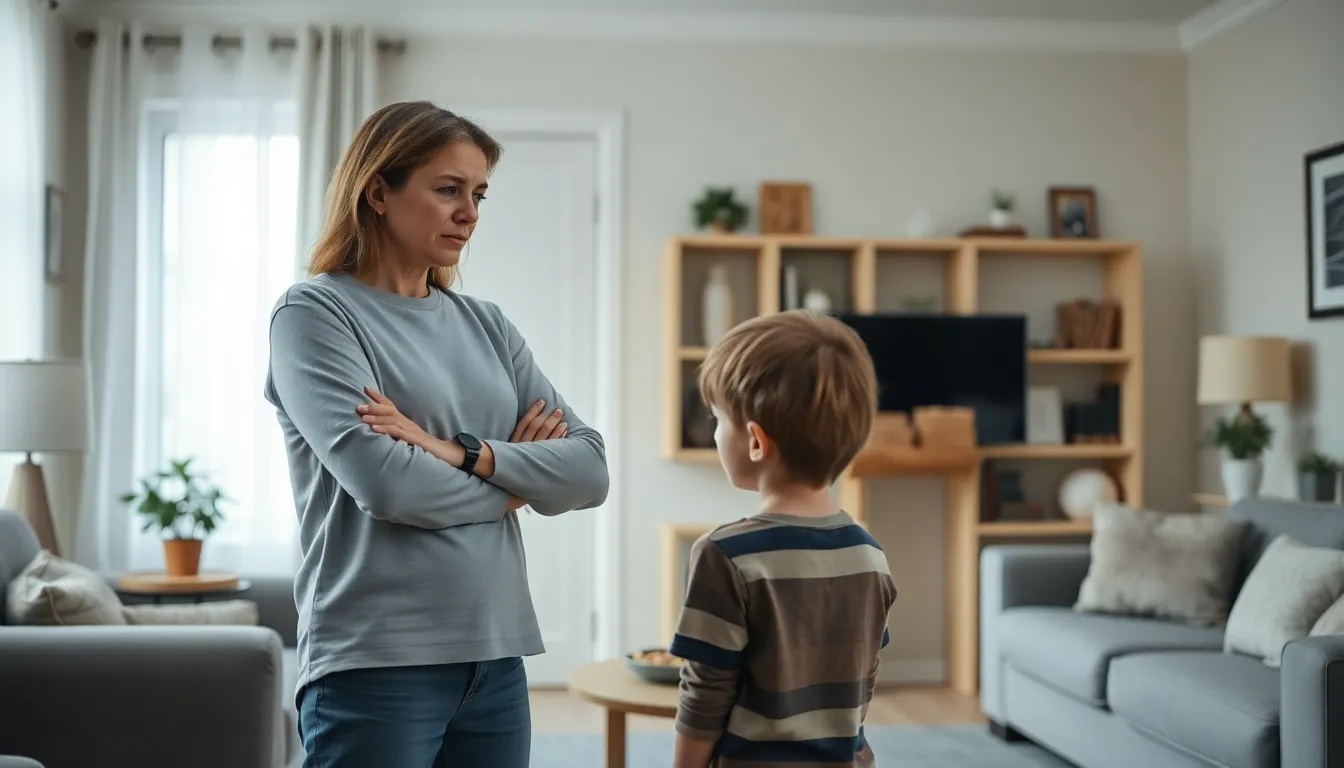
Authoritarian parenting relies on strict rules and high demands. This approach prioritizes obedience and discipline over emotional support and warmth.
Characteristics of Authoritarian Parents
Authoritarian parents enforce rules without room for flexibility. They often expect children to follow directions unquestioningly. Harsh punishments are common for misbehavior. Communication tends to be one-sided, focusing on directives rather than conversations. There’s little emphasis on nurturing or understanding children’s feelings. Children raised in these environments experience limited freedom and autonomy. These characteristics can lead to a rigid household atmosphere.
Effects on Child Development
Children of authoritarian parents often exhibit lower self-esteem and high levels of anxiety. Struggles with social skills are typical due to lack of open communication. Feelings of repression may permeate their interactions with peers. Individuals might display increased aggression as a reaction to strictness. Academic performance varies; while some excel out of fear of consequences, others may rebel. Overall, the emphasis on obedience can hinder emotional development and decision-making skills.
Authoritative Parenting Style
Authoritative parenting strikes a balance between structure and freedom. This style encourages children to thrive through supportive environments and clear expectations.
Characteristics of Authoritative Parents
Authoritative parents demonstrate warmth and responsiveness. They set firm boundaries but remain flexible. Open communication fosters a nurturing atmosphere, allowing children to express their thoughts and feelings. These parents listen actively and provide explanations for rules, ensuring children understand expectations. Encouragement of independence is key, as authoritative parents guide rather than control their children’s choices. Consistent discipline reinforces learning while maintaining emotional support, leading to a healthy parent-child relationship.
Benefits of Authoritative Parenting
Children raised under authoritative parents often exhibit higher self-esteem. These kids develop better social skills through effective communication and empathy. Research shows that they tend to perform better academically, enhancing motivation and drive. Emotional regulation is also a common outcome, allowing children to manage stress and challenges effectively. Conflict resolution skills flourish as children learn to negotiate and collaborate with others. Overall, authoritative parenting contributes positively to children’s development, equipping them with essential life skills and emotional resilience.
Permissive Parenting Style
Permissive parenting is characterized by high warmth but low discipline. This style invites nurturing yet lacks structure, which can lead to significant issues in child development.
Characteristics of Permissive Parents
Permissive parents often prioritize their children’s wishes over rules. They commonly avoid setting strict boundaries, leading to a more relaxed atmosphere. Flexibility in decision-making allows children to express themselves, but it can result in a lack of consistency. Parents in this category are highly affectionate and supportive, promoting open communication. They frequently act more like friends than authority figures, encouraging creativity and independence. Additionally, permissive parents may defer to their children’s desires, often prioritizing fun and enjoyment over discipline.
Consequences for Children
Children raised in permissive environments can struggle with self-regulation. They often find it challenging to manage their emotions and behaviors due to a lack of established boundaries. As a result, these children may develop difficulties in following rules and respecting authority. Academic performance can also suffer, as they may lack the discipline necessary for completing tasks. Socially, they might exhibit impulsive behavior, leading to conflicts with peers. Furthermore, children may experience lower self-esteem when faced with challenges, since they aren’t accustomed to coping with expectations or limits.
Uninvolved Parenting Style
Uninvolved parenting, also known as neglectful parenting, represents a lack of responsiveness to a child’s needs. Parents in this style often provide little emotional support and few behavioral expectations, leading to potential challenges for their children.
Characteristics of Uninvolved Parents
Uninvolved parents display minimal engagement in their children’s lives. Emotional neglect often defines their interactions, lacking warmth and nurturing. These parents typically offer little guidance or supervision, allowing children significant freedom without structure. Prioritization of personal needs usually takes precedence over the child’s wellbeing. Communication tends to be scarce, resulting in weak connections between the parent and child. Often, children feel disconnected and unsupported, as these parents remain distant and uninvolved in their activities and daily experiences.
Long-term Effects on Children
Children raised by uninvolved parents often face various long-term effects. Low self-esteem frequently emerges, as these children struggle with feelings of unworthiness. Academic performance can decline, reflecting a lack of motivation and guidance to succeed. Problems with emotional regulation often arise, leading to difficulties in forming attachments with peers and authority figures. These children are more likely to engage in risky behaviors, including substance abuse. Relationships may suffer due to an inability to trust and communicate, leaving lasting scars on their social development.
Diana Baumrind’s research on parenting styles offers invaluable insights for caregivers seeking to foster healthy child development. By recognizing the distinct characteristics of authoritative, authoritarian, permissive, and uninvolved parenting, parents can make informed choices that align with their children’s needs. Emphasizing warmth and structure through authoritative practices can significantly enhance a child’s emotional resilience and social skills. Conversely, understanding the pitfalls of authoritarian, permissive, and uninvolved approaches can help prevent potential long-term challenges. Ultimately, adapting parenting styles based on Baumrind’s findings can lead to nurturing environments that support children’s growth and wellbeing.