

Curious about Montessori schools? You’re not alone! These unique educational environments have been turning heads and raising eyebrows since the early 1900s. Imagine a classroom where kids aren’t just sitting at desks like miniature statues but are actively exploring their interests. That’s the magic of Montessori!
At its core, Montessori education emphasizes independence, hands-on learning, and a respect for a child’s natural development. Think of it as a playground for the mind, where children can learn at their own pace and dive into subjects that spark their curiosity. With a focus on collaboration and creativity, Montessori schools are redefining what it means to learn. So, if you’ve ever wondered what makes these schools tick, buckle up! The world of Montessori is about to unfold, and it’s anything but ordinary.
Montessori School Definition
Montessori schools emphasize a child-centered approach to learning. In these environments, children interact with specially designed materials that align with their developmental stages. Unlike traditional settings, students actively participate in their education through exploration and self-directed activities.
The method prioritizes independence and encourages creativity. Children choose their activities, which fosters a sense of ownership over their learning process. Additionally, mixed-age classrooms facilitate peer learning, allowing younger students to observe and learn from older peers.
Core principles define the Montessori philosophy. Respect for each child’s unique learning pace is paramount. Prepared environments support this approach, with materials that engage multiple senses and promote hands-on experiences.
Montessori education also nurtures social skills. Interactions among children help develop collaboration and communication abilities. Teachers serve as guides rather than traditional instructors, fostering an atmosphere of mutual respect and collaboration.
Assessment in Montessori schools differs from conventional methods. Observations rather than standardized tests provide insights into each child’s progress. This approach ensures that evaluation aligns with individual learning journeys rather than a one-size-fits-all model.
Overall, Montessori schools redefine learning experiences, emphasizing exploration and independence. By nurturing natural curiosity and creativity, these institutions lay the groundwork for lifelong learning and personal growth.
Key Principles of Montessori Education
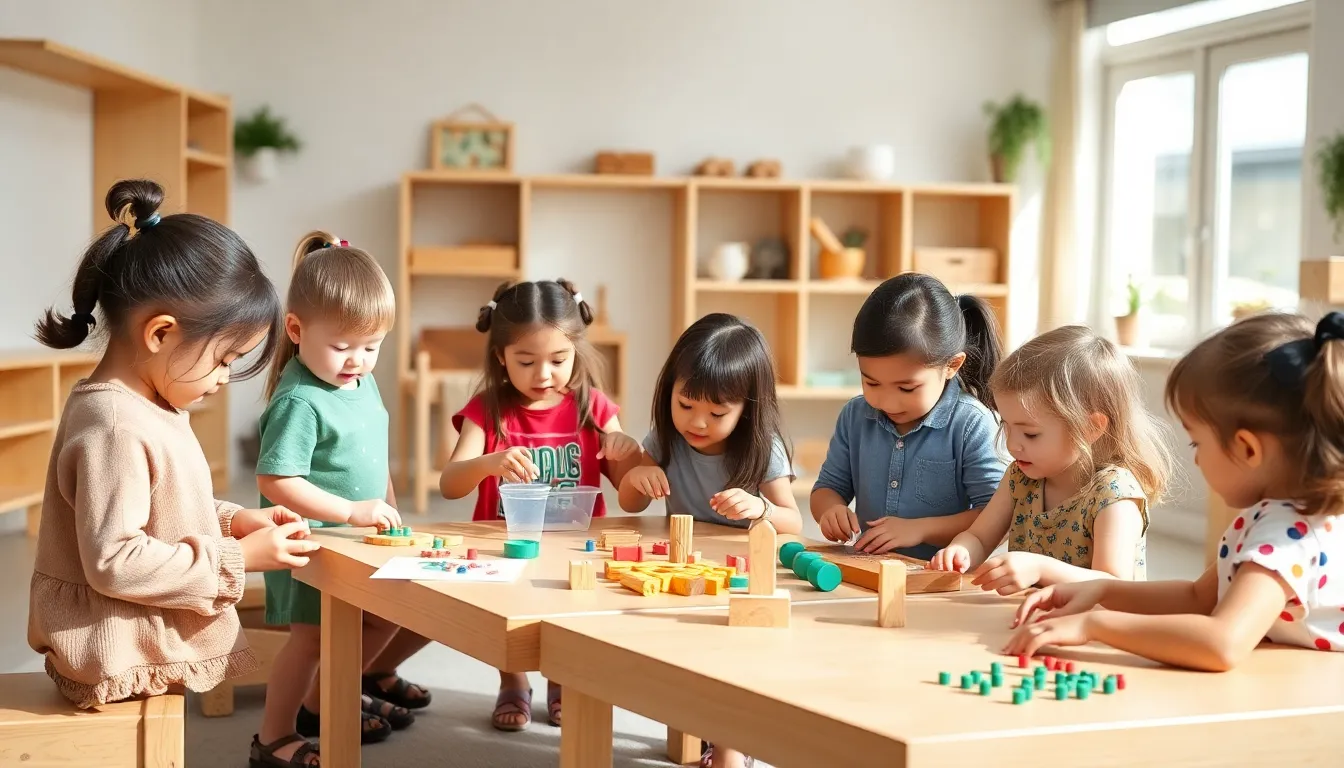
Montessori education focuses on several key principles that shape its learning environment and pedagogical approach.
Child-Centered Learning
Child-centered learning emphasizes individual needs. Each child explores subjects at their own pace, nurturing intrinsic motivation. Engaging with materials tailored to developmental stages inspires curiosity. Freedom to choose activities fosters responsibility and independence. Learning becomes an adventure, where children actively discover concepts rather than passively absorbing information. This method promotes deeper understanding and retention of knowledge, supporting lifelong learning.
Mixed-Age Classrooms
Mixed-age classrooms enhance the learning experience. Younger students benefit from observing and interacting with older peers, adopting skills and knowledge through social interactions. Collaboration occurs naturally, strengthening communication and teamwork skills. Older children gain leadership opportunities, reinforcing their understanding by teaching others. This community atmosphere cultivates empathy and respect among students. As a result, mixed-age settings create a harmonious learning environment that promotes growth for all ages.
Montessori Curriculum Components
Montessori curriculum components focus on holistic development through engaging activities. The following areas play crucial roles in fostering children’s growth.
Practical Life Skills
Practical life skills activities help children develop independence and confidence. Tasks like pouring, dressing, and sweeping teach responsibility and motor skills. Children learn to care for themselves and their environment through engaging in these activities. Mastery of practical life tasks builds concentration and fine motor coordination while reinforcing self-discipline. These skills form the foundation for daily living and promote a sense of accomplishment.
Sensorial Activities
Sensorial activities encourage children to explore their senses in a structured environment. Materials designed for these activities stimulate sight, sound, touch, taste, and smell, enhancing sensory perception. Children differentiate colors, textures, and sounds, deepening their understanding of the world around them. Sensorial experiences refine observational skills and critical thinking abilities, laying groundwork for academic learning. This hands-on approach enables children to form connections between concepts and their real-life applications.
Academic Subjects
Academic subjects in Montessori education include language, mathematics, science, and geography, each presented through engaging materials. Language lessons emphasize phonetics and vocabulary development, while mathematics uses manipulatives to illustrate abstract concepts. Science activities promote inquiry and hands-on experimentation, inspiring curiosity about the natural world. Geography lessons introduce global awareness through maps and cultural studies. This interconnected approach cultivates a passion for learning and promotes intellectual growth across disciplines.
Benefits of Montessori Schools
Montessori schools provide unique advantages that support holistic child development. Two key benefits are individualized learning pace and the development of independence.
Individualized Learning Pace
Children advance at their own pace in Montessori classrooms, allowing for tailored educational experiences. Each child’s learning style is respected. Teachers observe progress closely and adapt lessons based on individual needs. For instance, when a student grasps a concept quickly, they can move on to more challenging material. This approach nurtures a love for learning, as students engage deeply with subjects that interest them. By focusing on personal growth, Montessori education cultivates a more effective and enriching learning journey.
Development of Independence
Independence is a cornerstone of Montessori education. Children are encouraged to make choices regarding their activities, fostering self-reliance. For example, they learn to manage their time and responsibilities through self-directed work. This freedom helps them develop decision-making skills and confidence in their abilities. Group projects allow collaboration, enabling children to contribute their ideas and learn from one another. Montessori’s structured environment supports this independence, empowering students to take ownership of their learning and encouraging lifelong skills in organization and accountability.
Montessori schools offer a transformative educational experience that prioritizes the unique needs of each child. By fostering independence and creativity within a prepared environment, they encourage students to take charge of their learning journey. The emphasis on hands-on activities and peer collaboration nurtures essential life skills and a love for learning.
This innovative approach not only respects individual learning paces but also cultivates a sense of community among students. As children engage with their interests and develop critical thinking skills, they embark on a path of lifelong learning and personal growth. Montessori education continues to inspire educators and parents alike, proving that when children are empowered to learn in their own way, they thrive.