
Imagine a classroom where kids are free to explore, learn, and even make a mess—without being scolded! Welcome to the world of Montessori schools, where education meets play in the most delightful way. These innovative learning environments empower children to take charge of their own education, all while fostering creativity, independence, and critical thinking skills.
In a Montessori school, there are no boring lectures or rigid schedules. Instead, children engage with hands-on materials that spark curiosity and ignite a passion for learning. It’s like a playground for the mind, where every child can thrive at their own pace. If you’re looking for an educational experience that’s as fun as it is enriching, Montessori might just be the perfect fit for your little explorer.
Overview of Montessori Schools
Montessori schools focus on cultivating a child’s natural desire to learn through exploration and discovery. In these institutions, children engage with carefully designed materials that support self-directed learning. Educators act as guides, promoting independent thought and critical problem-solving skills.
Hands-on activities form the backbone of the Montessori method, allowing children to interact with their environment dynamically. Classrooms typically feature mixed-age groups, fostering peer learning and collaboration. This structure encourages social development and helps children learn from one another’s experiences.
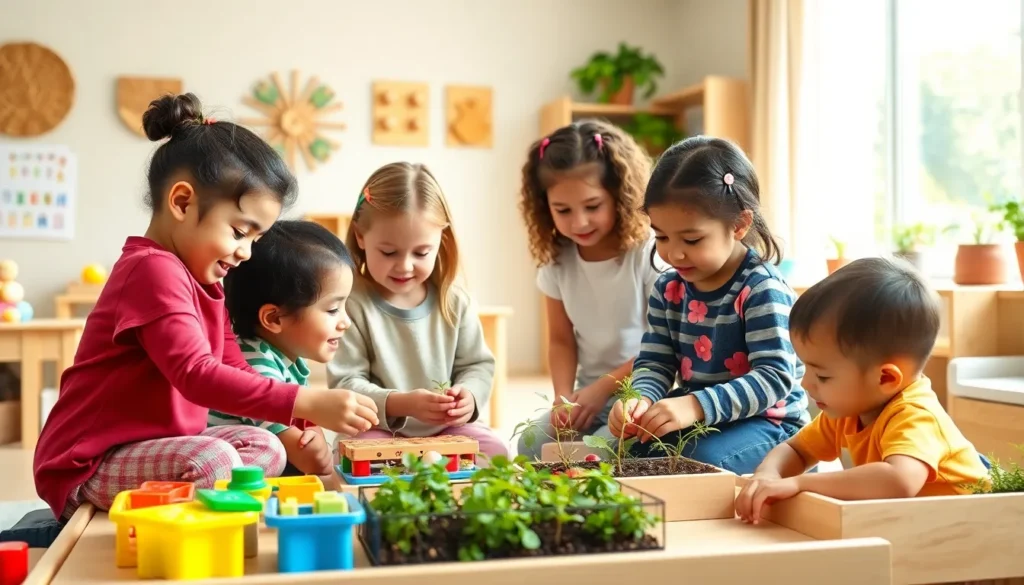
Curriculum design emphasizes practical life skills alongside traditional academic subjects. Students often partake in activities such as gardening, cooking, and community projects, enhancing their everyday skills. Learning becomes an engaging, meaningful experience rather than a series of rote tasks.
Assessment methods differ from conventional grading systems. Instead of tests, educators observe and document children’s progress, providing insights into individual growth and development. This reflective approach supports personalized learning plans that meet each child’s unique needs.
Montessori schools also encourage parental involvement in the educational process. Parents often attend workshops and events, facilitating a strong connection between home and school. The collaboration enhances the overall learning experience, helping children feel supported both in school and at home.
Overall, the Montessori method’s innovative framework nurtures creativity and independence. By creating a stimulating environment, these schools prepare children for lifelong learning and adaptability.
Key Principles of Montessori Education
Montessori education centers around key principles that enhance learning experiences. These principles focus on the child’s interests, fostering natural curiosity.
Child-Centered Learning
Child-centered learning forms the foundation of Montessori education. This approach acknowledges each child’s unique learning style and pace. Educators act as supportive guides, observing and responding to students’ needs. Freedom of choice allows children to explore subjects that captivate their attention. Empowering children fosters independence, making learning a personal journey. Social skills flourish in mixed-age classrooms, promoting peer collaboration. Observing classmates encourages children to learn from one another, enhancing engagement and understanding.
Hands-On, Experiential Learning
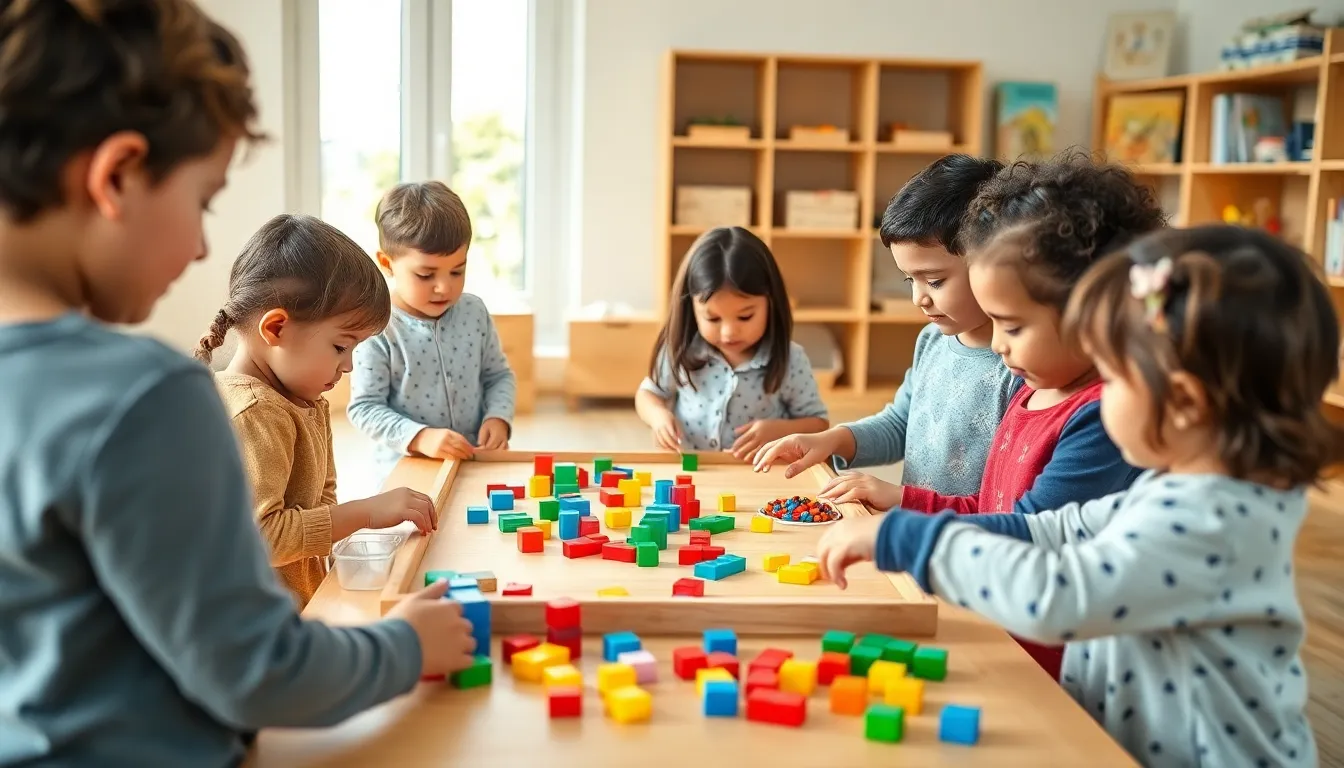
Hands-on, experiential learning embodies the essence of the Montessori method. It involves children directly interacting with their environment through tactile materials. Engaging in activities such as building and sorting deepens understanding of concepts. This practical approach promotes retention as students apply what they learn. Activities span various subjects, from science to arts, ensuring a holistic educational experience. Children develop problem-solving and critical thinking skills as they navigate tasks independently. Overall, this method promotes active participation and curiosity, creating a rich learning landscape.
Curriculum and Learning Environment
Montessori schools create unique environments that foster exploration and independence. The curriculum focuses on engaging children through hands-on experiences and multi-age collaboration.
Multi-Age Classrooms
Multi-age classrooms promote peer learning and social development. Children of different ages work together, sharing knowledge and skills. Older students often assume leadership roles, guiding younger peers. This structure encourages collaboration and communication, enhancing social interaction. A diverse age range also allows for individualized learning. Each child progresses at their own pace, making the learning experience more effective and personal.
Specialized Learning Materials
Specialized learning materials cultivate curiosity and engagement. Montessori classrooms feature a variety of tactile resources designed for hands-on exploration. These materials encourage active participation and support self-directed learning. Every activity aims to develop practical skills and a deeper understanding of concepts. Resources are often self-correcting, allowing children to evaluate their work independently. The focus on concrete, interactive tools aids in the retention of knowledge and fosters critical thinking.
Benefits of Montessori Schools
Montessori schools offer numerous advantages that contribute to a child’s overall development. These benefits include the development of independence and confidence, as well as enhanced social skills and collaboration.
Development of Independence and Confidence
Montessori environments encourage children to make choices, fostering independence. Children select activities based on their interests, allowing them to take ownership of their learning. This practice builds self-confidence as they master new skills and reach personal goals. Educators guide students while providing the freedom to explore, instilling a sense of responsibility in completing tasks. Self-correcting materials facilitate independent learning, enabling children to recognize and rectify mistakes. As they engage in various activities, students develop decision-making abilities, which serve them well beyond the classroom.
Enhanced Social Skills and Collaboration
Collaborative learning thrives in Montessori classrooms, thanks to the mixed-age structure. Older students naturally mentor younger peers, promoting teamwork and social interaction. Through shared activities, children learn to communicate effectively and respect diverse perspectives. This environment cultivates empathy and compassion, essential qualities for healthy relationships. Frequent interaction with classmates enhances emotional intelligence, paving the way for strong friendships. Lessons often incorporate group projects, which allow children to practice negotiation and conflict resolution skills, preparing them for future collaborative settings.
Challenges and Considerations
Montessori education presents unique challenges and considerations for families exploring this approach.
Misconceptions About Montessori Methods
Common misconceptions surround Montessori methods. Some people assume Montessori schools lack structure. In reality, these schools offer a well-defined framework focusing on children’s independence and collaboration. Another misconception suggests Montessori education ignores academics. The truth is, it integrates essential subjects into hands-on activities, fostering a comprehensive learning experience. Critics often believe that children lack guidance in this environment. In contrast, trained educators actively support development, guiding children rather than directing them.
Affordability and Accessibility
Affordability poses a significant challenge for many families. Montessori schools often feature higher tuition rates compared to traditional institutions. The costs arise from specialized teacher training and unique classroom materials. Financial aid options exist, but they may not cover all needs. Accessibility also varies; not all communities offer Montessori programs, limiting options for some families. Parents looking for alternatives might encounter long waiting lists, further complicating enrollment. Engaging in community discussions about education can help promote the establishment of more Montessori representations, addressing both affordability and accessibility concerns.
Montessori schools offer a unique educational approach that nurtures a child’s natural curiosity and independence. By emphasizing hands-on learning and collaborative environments, these schools foster essential skills like problem-solving and critical thinking. The focus on practical life skills alongside academics prepares children for real-world challenges.
While there are challenges related to affordability and accessibility, the benefits of a Montessori education can be profound. Families considering this path will find an enriching experience that encourages lifelong learning and personal growth. Ultimately, Montessori schools stand out as a compelling choice for parents seeking a dynamic and supportive learning environment for their children.